

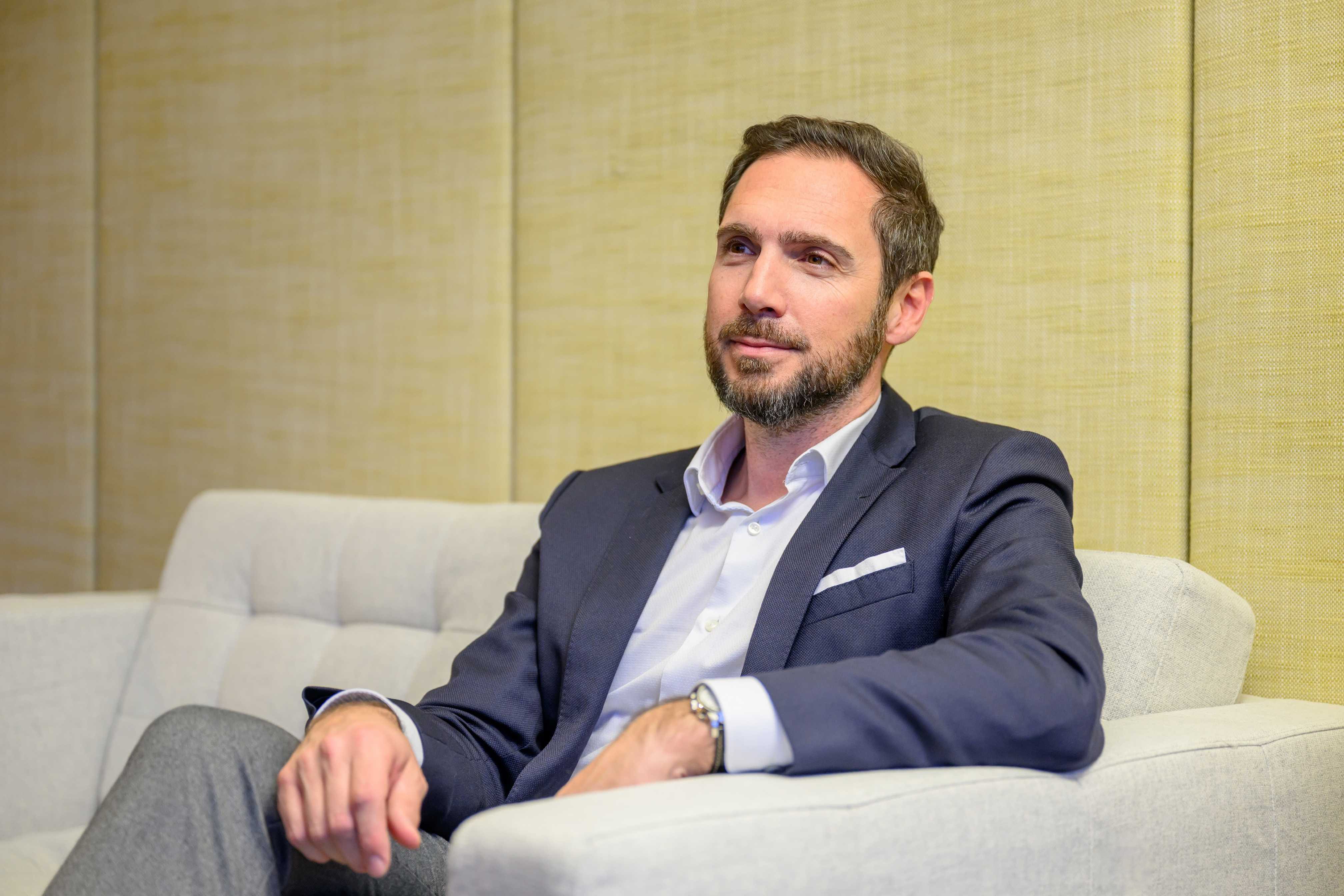
In this interview, our CEO, Thomas Fessard, reflects on the evolution of SpiroChem over the past 15 years, from a traditional CRO model to a Partner Research Organization and on how chemistry plays a central role in enabling better decisions in drug discovery.
The discussion also highlights the importance of focusing on complex problems, where insight and direction matter as much as execution, particularly across emerging modalities.
SpiroChem has been around for 15 years — what was the original vision, and how has it evolved?
SpiroChem was founded as an ETH Zürich spin-off with a clear focus: tackling complex chemistry that others typically avoid. From the beginning, we prioritised capability over capacity — solving difficult problems rather than scaling routine work.
Over the past 15 years, we have built a highly skilled team of chemists and developed what is today a robust discovery engine for complex molecules. We grew in Basel, expanded internationally with our presence in Canada, and established long-term collaborations with pharma, biotech, and research organisations worldwide.
We didn’t try to be the biggest — we focused on being the best at solving the hardest problems. Over time, that focus compounded into a strong position in areas where chemistry is non-trivial.
What evolved is our understanding of where value truly lies. Chemistry is not the end product — it is a tool. The real impact comes from enabling better decisions in drug discovery: what to design, what to make, and how to move forward efficiently.
At what point did you realise the traditional CRO model was not enough?
This came progressively as the complexity of the projects increased. The traditional CRO model is built around selling time and execution capacity. That works when problems are well defined. It becomes limiting when you are dealing with uncertainty, new modalities, or poorly understood biology.
In many of our projects, the key questions were not “can you make this compound,” but “what should we make next,” “how should we explore this space,” or “how do we reduce risk early.” These are decision-making questions, not execution questions.
At the same time, market dynamics made it clear that competing on cost is a race to the bottom, whereas competing on complexity is a path to differentiation.
That combination led us to evolve our model — from executing predefined work to contributing to how programs are designed and decisions are made.