

Basel, Switzerland and Tokyo, Japan - May 11, 2026
SpiroChem AG (hereinafter referred to as “SpiroChem”) and Veritas In Silico Inc. (hereinafter referred to as “VIS”) have jointly announced that they have reached an agreement and have formally entered into a Joint Research Agreement for the discovery of mRNA-targeting compounds. They had signed MOU in January 2026, and subsequent discussions on the details of the Joint research. Building on this milestone, the parties have culminated their negotiations in the conclusion of this Agreement.
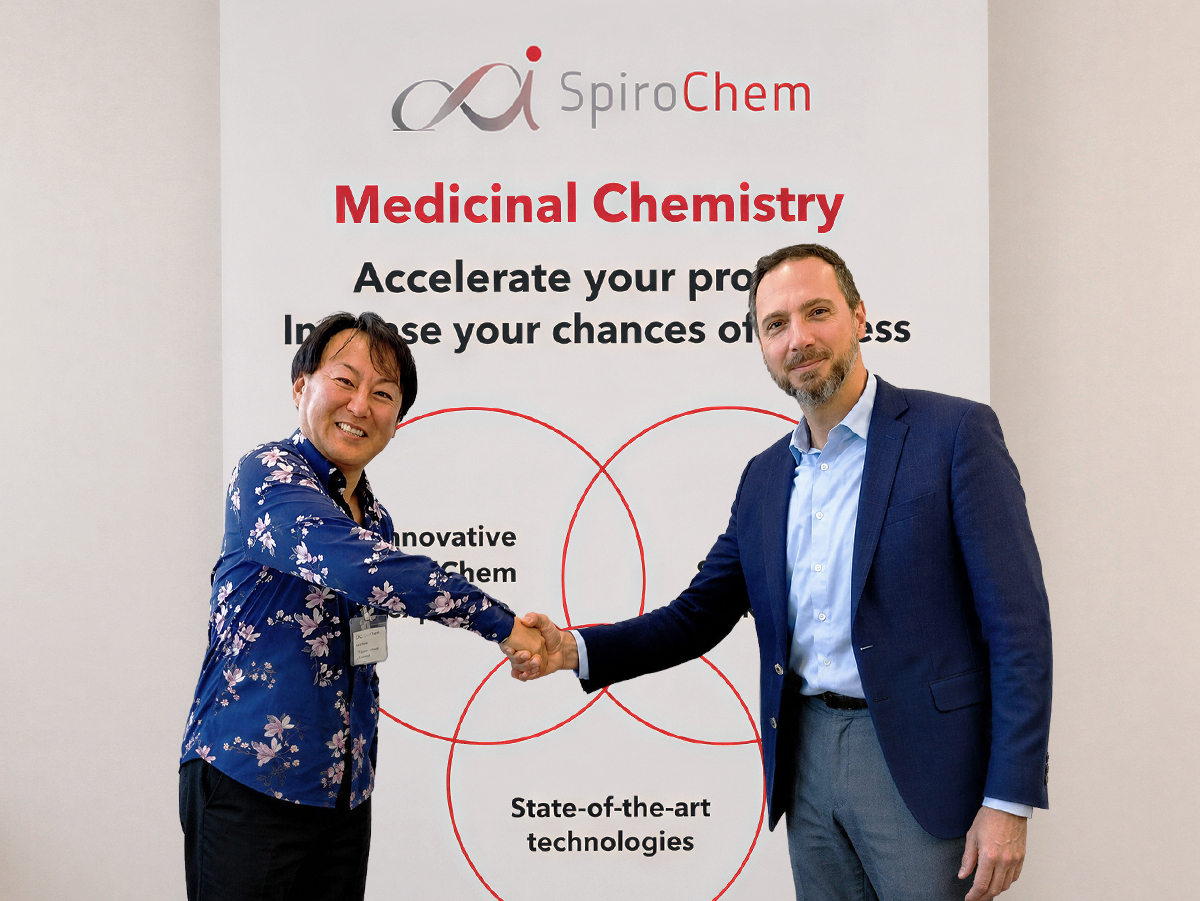
The Joint research aims to integrate SpiroChem's world-class expertise in macrocycle, peptide, peptoid chemistry together with its medicinal chemistry design, optimization, and data generation capabilities with VIS's AI-driven mRNA-targeted drug discovery platform “aibVIS”, and its cellular assay capabilities, with the goal of creating the most advanced and highest-quality small molecules targeting mRNA currently achievable. The parties intend to jointly explore the structural characterization of novel macrocycles, peptides, peptoids, and beyond Rule-of-5* scaffolds that interact with promising mRNA motifs of interest. The teams aim to generate high-value drug candidates with strong commercial potential, deepen the understanding of structure–activity relationships for mRNA recognition, and generate high-quality experimental datasets that enable informed progression decisions and future drug discovery programs.
In the initial research phase, they will conduct binding evaluations of SpiroChem's compounds against selected mRNA targets that have been identified as significant from both business development and scientific perspectives and have been discovered at VIS. This phase is expected to provide an initial validation framework for mRNA-binding chemical matter and inform the design of subsequent development programs.
Furthermore, it is the intention of both parties to jointly commercialize the outcomes of this collaborative exploratory research through partnerships, licensing arrangements, or co-development agreements with biotechnology companies and pharmaceutical firms, leveraging the complementary strengths of VIS in mRNA target discovery and SpiroChem in the design and generation of actionable chemical matter.
Thomas Fessard, PhD, CEO and Co-founder of SpiroChem:
This collaboration pairs VIS’s leading RNA structure analytics and design with SpiroChem’s capabilities in complex medicinal chemistry.
At SpiroChem, we focus on enabling programs where chemistry is a determining factor in success. In this context, we contribute not only compounds, but also the design, optimization and data generation required to translate early hypotheses into actionable chemical matter.
By combining VIS’s RNA design platform with our chemistry platforms, we aim to generate high-quality experimental data that can guide decision-making and support future development and partnering opportunities.
Shingo NAKAMURA, PhD, CEO and founder of VIS:
The synergistic integration of SpiroChem's exceptional small molecule compound library and its profound expertise in medicinal chemistry with VIS's AI-driven mRNA-targeted drug discovery platform “aibVIS” — which embodies the Company's extensive experience in mRNA-targeted drug discovery — is anticipated to serve as a powerful driving force in evaluating and optimizing novel binding interactions between mRNA and small molecule compounds. The binding experiments targeting mRNA structures to be conducted under this initiative are expected not only to facilitate the discovery of viable drug candidates, but also to yield invaluable insights into the binding modes between mRNA structures and macrocyclic compounds. Under the close and productive collaboration with SpiroChem, both parties look forward with great anticipation to unveiling new strategic directions for the discovery of mRNA-targeted small molecule drugs.
Impact on Future Business Performance of VIS
This Joint Research Agreement represents an initial research phase focused on the generation of experimental data and the evaluation of mRNA-binding chemical matter, forming the basis for potential subsequent development and commercialization activities between the parties. In connection with the execution of the Agreement, no upfront payments or similar income are anticipated. Furthermore, the research costs associated with the Joint research initiative have already been incorporated into VIS's annual budget for the fiscal year ending December 2026, and accordingly, no material impact on the Company's future financial performance is expected at this moment.
In case any matters requiring disclosure arise in the future, they will be promptly disclosed.
Glossary for Reference
*Rule-of-5: The Rule of Five is an empirical guideline originally proposed in 1997 by Dr. Christopher Lipinski and colleagues at Pfizer Inc., designed to predict the likelihood of a small molecule compound being suitable for oral administration. It is widely employed as a screening criterion in the early stages of drug discovery to identify compounds with "drug-like" properties.
Specifically, the Rule of Five establishes the following four physicochemical parameters, each of which is associated with the number "5" or a multiple thereof:
- Molecular weight: ≤ 500 Da
- Lipophilicity (cLogP): ≤ 5
- Hydrogen bond donors (total count of OH and NH groups): ≤ 5
- Hydrogen bond acceptors (total count of N and O atoms): ≤ 10
A compound is generally considered to possess drug-like characteristics if it satisfies no more than one violation of these four criteria — that is, if it complies with at least three of the four parameters.
For Further Information, Contact:
SpiroChem AG Email for Inquiries: contact@spirochem.com
Veritas In Silico Website Inquiry Form: veritasinsilico.com